
So, CES 2026 just dropped one of the most talked‑about gadgets in home entertainment: the LG Sound Suite. And let me tell you, this isn’t just another soundbar announcement. This is LG basically saying: “Forget complicated home theater setups — we’re rewriting the rules.”
At the heart of it all? The H7 soundbar, the world’s first powered by Dolby Atmos FlexConnect. And yes, that’s a big deal.
Wait, What’s Dolby Atmos FlexConnect Anyway?
What's Inside
If you’ve ever tried setting up surround sound at home, you know the pain: wires everywhere, speakers that don’t fit your room, and hours of fiddling with settings. Dolby Atmos FlexConnect is supposed to fix all that.
Here’s the pitch: it adapts to your room layout automatically. No complicated calibration, no “move your couch two inches to the left.” Just plug it in, and boom — immersive audio that makes every explosion louder, every song richer, and every game day more electrifying.
Sounds too good to be true? Maybe. But that’s exactly why people are buzzing.
LG Sound Suite: Lego for Home Audio Nerds
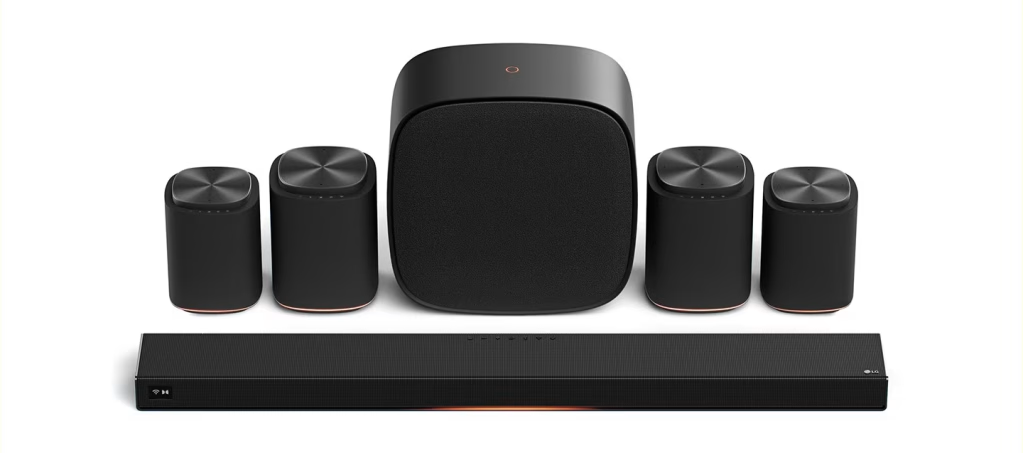
Here’s where LG gets cheeky. The Sound Suite isn’t just one soundbar. It’s a modular system. You can mix and match:
- H7 soundbar (the star of the show)
- M7 and M5 surround speakers
- W7 subwoofer
That means 27 possible configurations. Start small with just the soundbar, or go full beast mode with a 13.1.7‑channel home theater. It’s like building your own audio Lego set, except instead of plastic bricks, you’re stacking cinematic sound.
And here’s the kicker: even if you don’t own an LG TV, the H7 soundbar still works with any TV via HDMI. That’s controversial because it’s LG basically saying, “We’ll play nice with your Samsung or Sony too.”
Why This Could Be a Game‑Changer
Streaming platforms are already pumping out movies, shows, and sports in Dolby Atmos. The visuals on modern TVs are insane, but most people’s audio setups? Meh.
LG is betting big that people are finally ready to care about sound again. And honestly, they might be right.
The Sound Suite adds some wild extras:
- Sound Follow: Uses ultra‑wideband (UWB) tech to track where you’re sitting and adjust the sweet spot. Translation: every seat feels like the best seat.
- Room Calibration Pro: AI analyzes your room’s acoustics and fine‑tunes audio automatically.
- AI Sound Pro+: Stereo audio gets up‑mixed into immersive spatial sound.
Basically, LG wants to make sure you never complain about “flat” audio again.
The Controversial Part
Here’s where I get skeptical. LG is promising flexibility, simplicity, and performance all in one package. But audiophiles know: modular systems can get messy.
Will wireless connections lag? Will AI calibration actually sound better than manual tuning? And let’s be real — will people pay premium prices for a soundbar when cheaper options already exist?
LG is clearly aiming at the sweet spot between hardcore home theater geeks and casual streamers who just want better sound without the headache. But balancing those two audiences? That’s tricky.
Powered by LG’s Alpha 11 AI Processor
This isn’t just marketing fluff. The H7 soundbar runs on the same α (Alpha) 11 AI Processor Gen 3 that powers LG’s flagship OLED TVs. That means deep learning, neural processing, and AI‑driven sound separation. Voices, music, and effects are all balanced automatically.
Pair that with Peerless speaker units (a brand with over a century of audio craftsmanship), and you’ve got a system that’s aiming for premium performance.
Final Thoughts: Hype or Real Deal?
So, is the LG Sound Suite the future of home audio? Or just another CES gimmick?
Here’s my take:
- If you’re tired of messy setups, this could be a lifesaver.
- If you’re an audiophile, you’ll probably nitpick every AI decision it makes.
- If you’re a casual streamer, it might finally make you care about sound as much as picture.
Either way, LG just made audio controversial again — and I kind of love it.
SEO Wrap‑Up:
The LG Sound Suite with Dolby Atmos FlexConnect is positioning itself as the best soundbar of 2026 for flexible home theater setups. With modular design, AI tuning, and wireless convenience, it’s aiming to make immersive audio accessible to everyone. Whether it delivers on all that hype? We’ll find out soon.
🔥 Would you like me to also craft a Facebook caption + hashtags version of this so you can share it socially and spark debate?